
No hay productos en el carrito.
A Guide to Liquidity in A...

They are crucial indicators of a company’s solvency, financial stability, and leverage. Investors and creditors closely analyze the liabilities section of the balance sheet to assess a company’s ability to manage its debt, make timely payments, and maintain a healthy financial position. For reporting the financial health of a business, few reports are as essential as the balance sheet. Since balance sheets are often used to assess how a company operates compared with others or with its own past periods, accountants prepare balance sheets using generally accepted procedures.
Definitions of related terms
- Strong controls show a company’s dedication to accuracy and trustworthiness.
- CFI is the global institution behind the financial modeling and valuation analyst FMVA® Designation.
- Under IFRS, an entity is not required to have separate classifications as long as a liquidity-based presentation provides reliable and more relevant information than a classified balance sheet does.
- They are not converted into current assets by balance sheets to prevent penalizing businesses that pay operating costs in advance.
- How quickly a current asset account can convert into cash can change depending on the company and the industry.
Fixed assets like property and equipment are long-term illiquid assets. Balance sheet liquidity is a measure of a company’s ability to meet its financial obligations with its liquid assets. Stocks and other investments Debt to Asset Ratio that can be sold in a few days are usually next.
Current liabilities

Checks are done regularly to make sure the balance sheet is correct. Order of Liquidity is a concept in financial management, which refers to the sequence in which various assets of a company are converted order of liquidity into cash or cash equivalents. The assets that can be easily converted into cash without any significant price fluctuations are considered first in the order of liquidity. Which are liquid assets you can convert into cash immediately at the current assets of the market price, through marketable securities. Non-current assets are listed next because they are not as easily converted to cash.
Historical Cost Basis
If the asset is shown on the balance sheet it may well be market value, but it might have been purchased many years earlier. Inventory includes amounts for raw materials, work-in-progress goods, and finished goods. The company uses this account when it reports sales of goods, generally under cost of goods sold in the income statement. Long-term liabilities are defined by business owners as debts with maturity dates longer than one year. Examples of long-term liabilities include bonds, notes and mortgages. Classify a loan that has a portion due in less than a year as a current liability.
Cash: The Starting Point of a Company’s Financial Health
Because they are the most liquid, meaning, you can convert income summary them to cash quickly and easily. Let’s take a look at an example of a balance sheet for a fictional company “ABC Enterprises” to illustrate the order of liquidity. Current liabilities are listed first, arranged in order of their maturity—how soon they need to be paid. Ultimately, the order of liquidity of accounts will depend on the company and the industry. There are different ways of presenting information on the balance sheet.
- As an illustration, a company might use available funds to buy raw materials, which it then transforms into products and sells to customers.
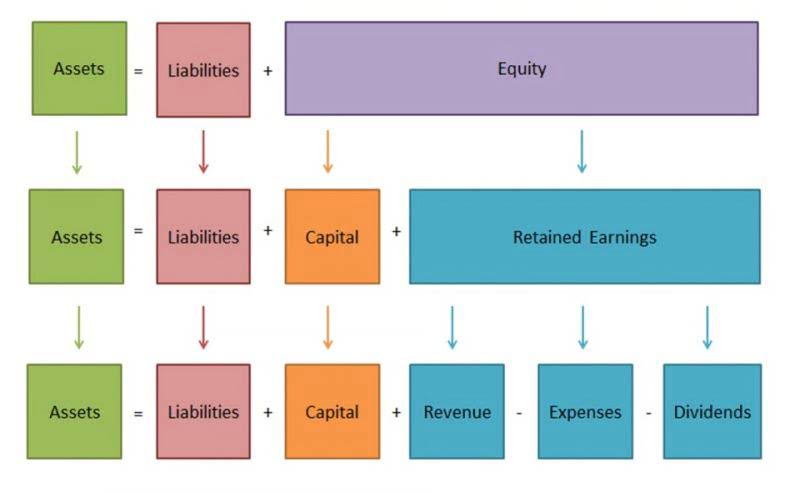
- As a company’s assets grow, its liabilities and/or equity also tend to grow in order for its financial position to stay in balance.
- In the world of finance technology, using advanced software helps a lot with balance sheet management.
- For many assets, decreases in their value are recorded, whereas increases are not.
- The order is important because it reflects which assets you are going to use in order to pay liabilities.
- Understanding the breadth of potential assets provides context before we dive into balance sheet order.
- Cash is always listed first on balance sheets because it is the most readily available asset.

Shareholder equity is not directly related to a company’s market capitalization. The latter is based on the current price of a stock, while paid-in capital is the sum of the equity that has been purchased at any price. Owners’ equity is the owners’ total investment in the business after all liabilities have been paid. For sole proprietorships and partnerships, amounts put in by the owners are recorded as capital.